Most coaches I talk to run their business on a spreadsheet, a video-call link and a lot of text messages. I did it that way for years. It works, until you look at what it isn't doing for you. Online coaching without spreadsheets isn't about buying fancier software. It's about technology that actually helps you coach, instead of just holding whatever you type into it.
If you've never seen the difference, you can't miss it. So let me show you what I was missing, and what my clients were missing with me.
A tool stores. An assistant notices.
A spreadsheet is a tool. It holds exactly what you put in it, in exactly the shape you put it in, and it never tells you anything you didn't already know to look for.
Coaching technology done right works more like an assistant. It collects the data for you, puts it in one place, compares each client to their own normal, and taps you on the shoulder when something changes. You still make every coaching decision. You just stop being the only one watching.
What spreadsheet coaching costs you
When I ran my gym, I had programming in one place, nutrition in another, calls in a third and payments in a fourth, with spreadsheets holding it all together. Here's what that setup quietly cost me.
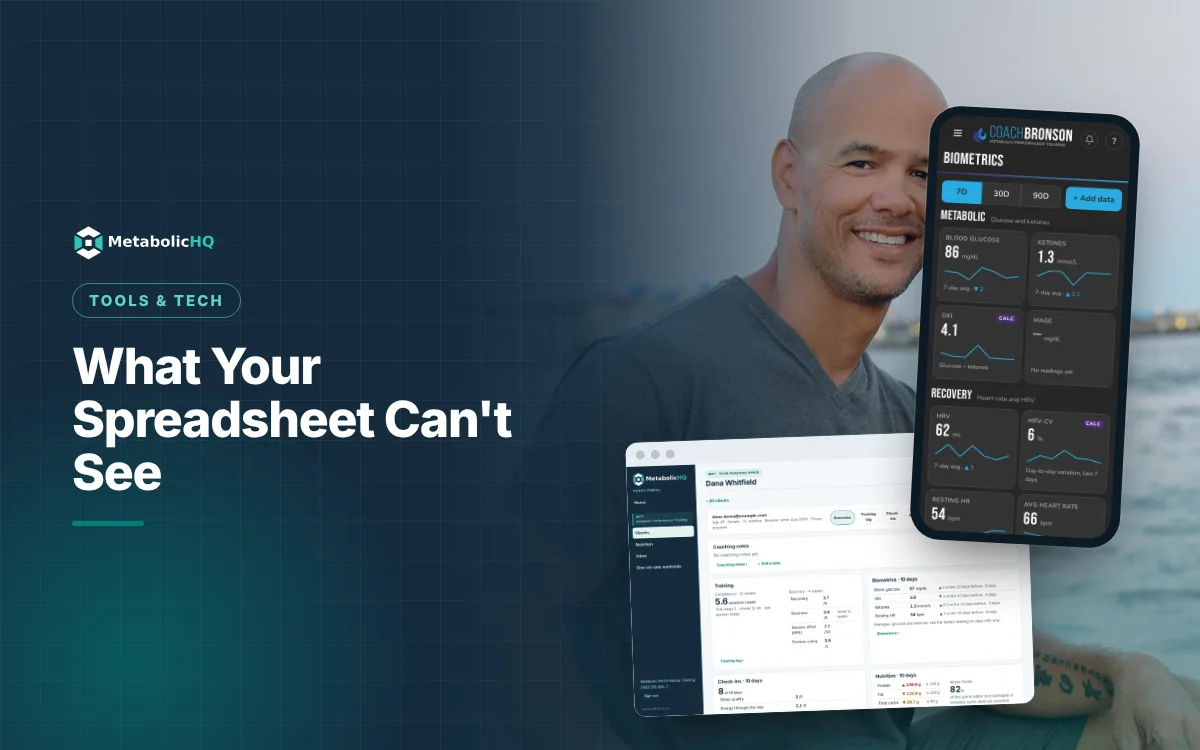
- The data never connects. Sleep is in one tab, workouts in another, food in a separate app and glucose readings in a text thread. The pattern that matters, like poor sleep showing up as harder workouts three days later, lives across all of them, so nobody sees it.
- There's never enough data. Clients fill in the sheet for a week or two, then the cells go blank. You end up coaching from a handful of numbers and a gut feeling.
- The client does the data entry. They copy numbers from their meter, their watch and their food app into your sheet, then answer the same check-in questions every week. That's homework, and homework is the first thing busy people drop.
- You're the only analytics engine. All the correlating and spotting happens in your head, usually late at night, one client at a time. Past a handful of clients, things slip through. Not because you're a bad coach, but because nobody can hold 20 people's last 30 days in their head.
What your clients are missing
Clients feel the gaps too, even if they can't name them. They log into three places to see what they're supposed to do today. They send you a number and wait a day for an answer. They rarely see their own progress laid out in a way that makes the effort feel worth it.
And when a client starts to slide, nobody notices until they cancel. In a spreadsheet, a quiet client looks exactly like a busy one.
How to track online coaching clients so the data works for you
Whatever you use, here's what good coaching technology should be doing for you today. Use it as a checklist for your current setup.
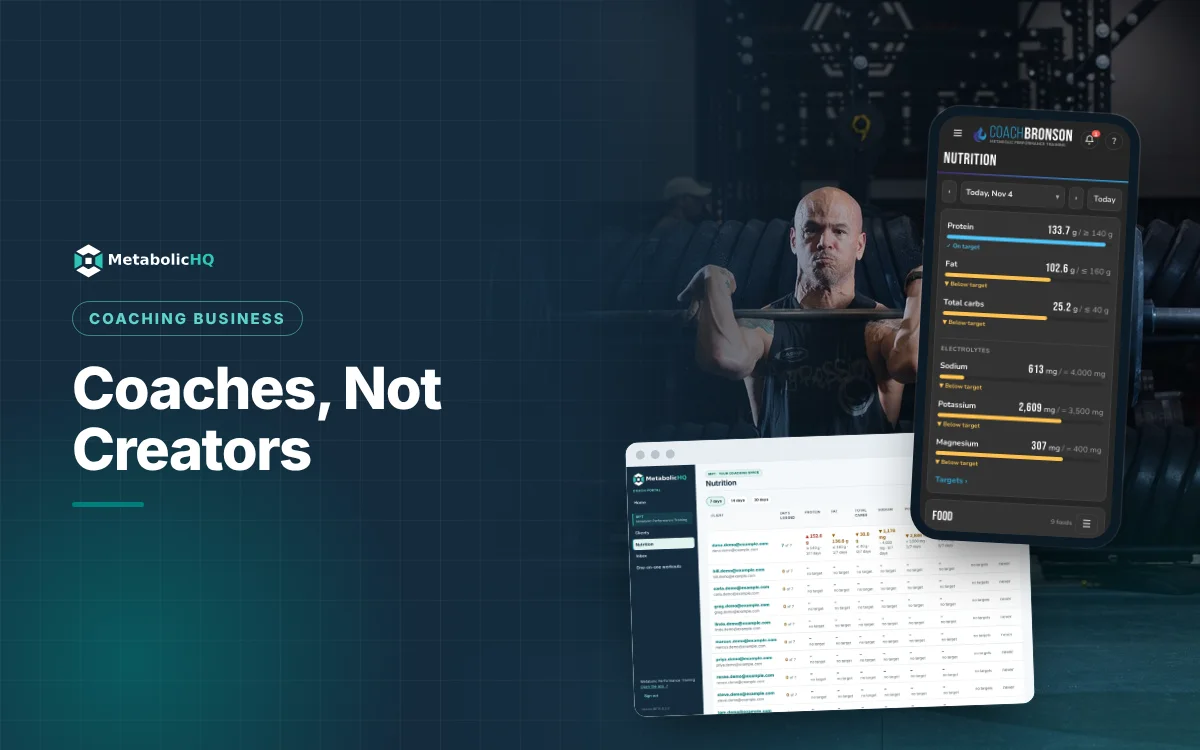
- One place for everything. Training, nutrition, biometrics, check-ins and calls for each client, on one screen, for you and for them.
- Less typing for the client. Logging should take seconds: tap a set done, scan a barcode, save a reading.
- Each client compared to themselves. A resting heart rate of 62 means nothing on its own. Five beats above their own normal for three days means something.
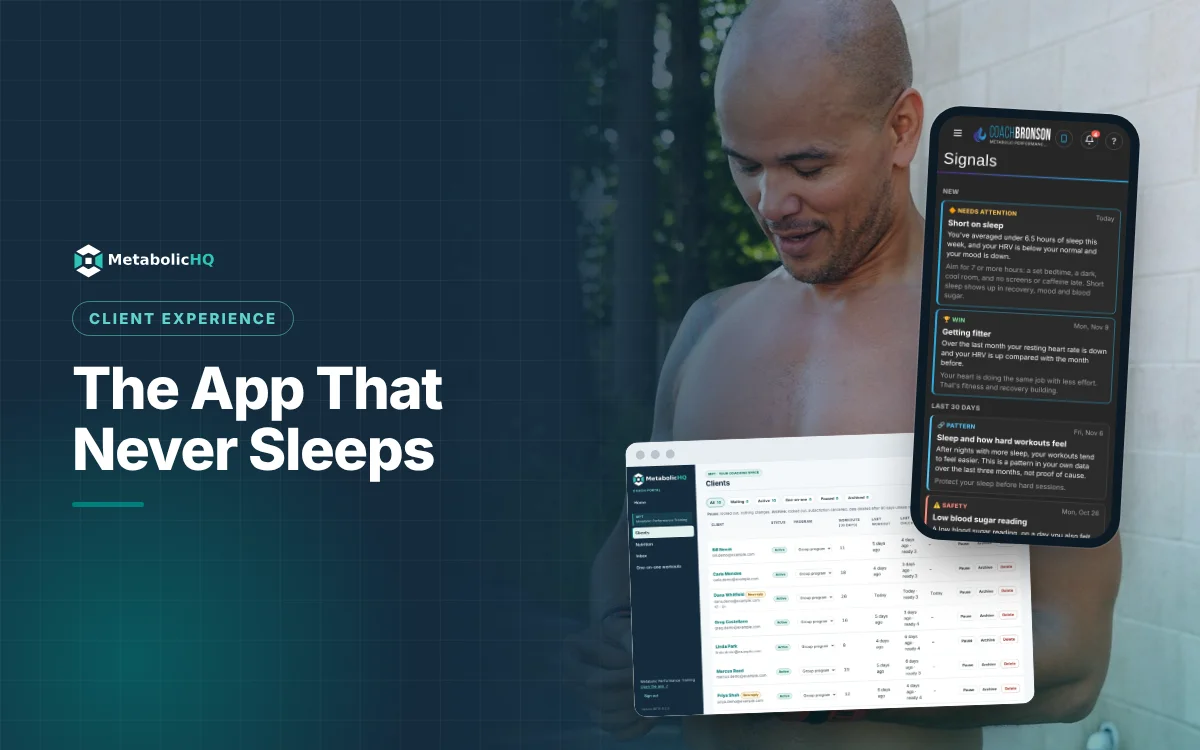
- Flags you didn't have to go looking for. The software should tell you who needs attention this morning, and who's quietly winning.
- Progress the client can see. Their own trends, in their own app, without waiting for you to build a report. (Visible progress is also what makes gamification work for client retention.)
- Your notes written for you. A call shouldn't cost you another half hour of typing up notes.
Try this exercise this week: count how many places one client's information lives, and time your next check-in prep. Most coaches are surprised by both numbers.
Online coaching without spreadsheets in MetabolicHQ
I built MetabolicHQ because I needed that checklist covered for my own clients. Clients get one app under your brand for their workouts, a low-carb food diary, biometrics like glucose, ketones, GKI and HRV, check-ins and video calls. You get a desktop portal where each client's training, recovery, biometrics, check-ins and nutrition sit together.
The app also does the noticing. It tracks readiness and training load against each client's own normal, and its Signals check every client's numbers every morning, flagging things like recovery slipping, protein running low or a client pulling away, plus the wins worth celebrating. Calls inside the app come with AI-drafted summaries and action items. Biometrics are entered by hand today; wearable sync is in development.
You don't need to be a tech person to use it. Sign-up takes about two minutes, it's month to month, and it's free for up to 5 clients, so you can see what you've been missing with real clients before you pay anything.
Keep the coaching human
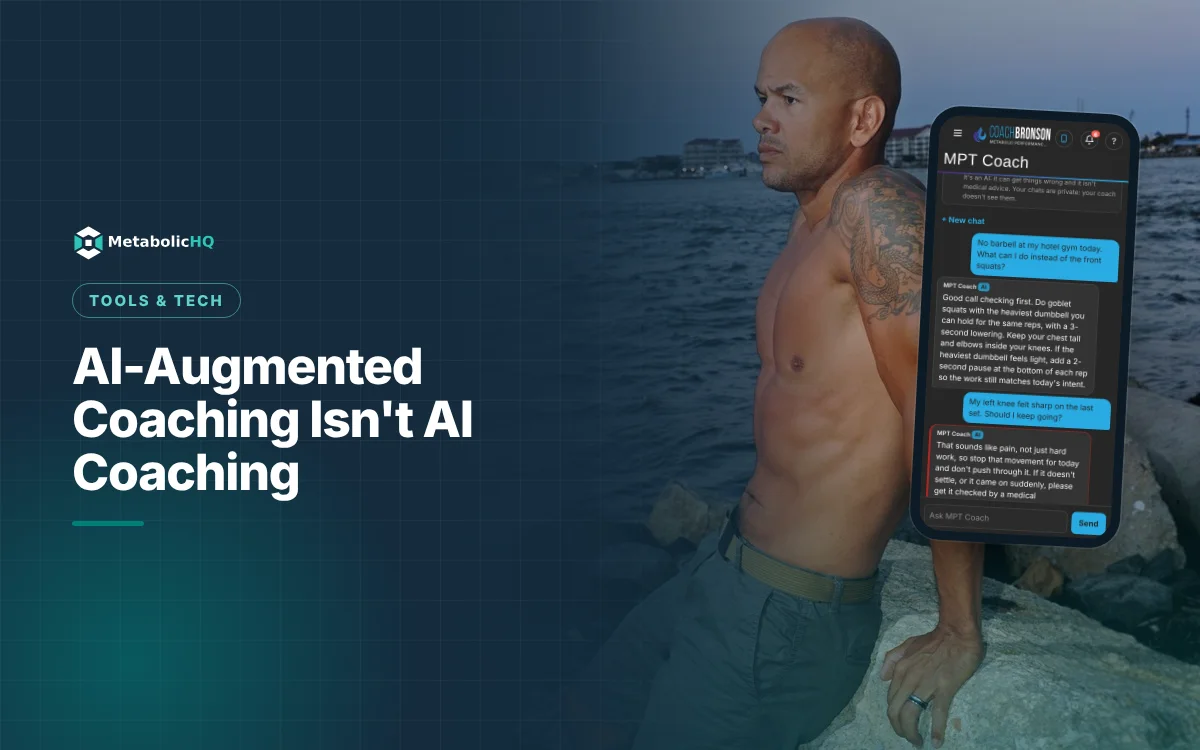
None of this replaces you. Technology should take the copying, the cross-checking and the late-night spotting off your plate, so the time you spend with clients goes to what only you can do: judgment, encouragement and the conversation that keeps them going. That's the point of moving past the spreadsheet. Not less coaching. More of it, where it counts.

Coach BronsonFounder of MetabolicHQ. 20 years coaching human performance and nutrition, 25 in IT engineering and program management. More about me
Try it with your own clients
MetabolicHQ is free for up to 5 clients: training, low-carb nutrition, biometrics and coaching calls in one app under your brand.
Start free