Anyone can call themselves a coach. A certificate, an Instagram account and a payment link will get you started. What makes a professional fitness coach is something clients feel within a few weeks: you know your stuff, you run a tight operation, you see what's really going on with them, and you turn all of that into the right next decision. Expertise, efficiency, insight and application. Miss one, and the other three carry less weight.
After 20 years of coaching, these four qualities are what I'd use to judge any coach, myself included. Here's what each one looks like at its best.
1. Expertise: knowing more, and showing it consistently
Expertise is the foundation: understanding training, nutrition and the body well enough to explain why, not just what. But clients don't experience your knowledge directly. They experience it through what you hand them.
- Clear standards. How you want a movement done, how to scale it, what counts as a good session.
- The same answer every time. A question answered one way in January and another way in June erodes trust, even if both answers were defensible.
- Teaching, not just telling. Videos, guides and explanations clients can come back to, so your expertise keeps working between calls.
The amateur keeps their knowledge in their head. The professional puts it where clients can use it.
2. Efficiency: respecting everyone's time, including yours
Efficiency sounds like a business word, but clients notice it first. It's how fast they get an answer, how easy it is to find today's workout, and whether logging takes ten seconds or ten minutes.
It matters just as much on your side. Every hour spent copying numbers between apps, rewriting the same welcome email or typing up call notes is an hour not spent coaching. A professional builds systems so the routine work is fast and consistent, and saves their attention for the work only they can do.
A good test: if you doubled your client list tomorrow, would your coaching get worse, or just busier?
3. Comprehensive insight: seeing the whole client
Most coaching mistakes don't come from a lack of knowledge. They come from an incomplete picture. You program a heavy week without knowing their sleep has been poor. You push protein without seeing that their check-ins say work stress is through the roof. You read a stall as low effort when their recovery data says otherwise.
Professional coaching means looking at training, nutrition, recovery, biometrics and how the client says they feel, together, and comparing each person to their own normal. That's hard to do when the information lives in a spreadsheet, a food app, a text thread and your memory. (More on that in What Your Spreadsheet Can't See.)
4. Application: turning knowledge into the right decision
This is where experience earns its keep. Knowing the research is one thing. Knowing that this client, this week, needs a lighter session and a phone call instead of a new macro target is another.
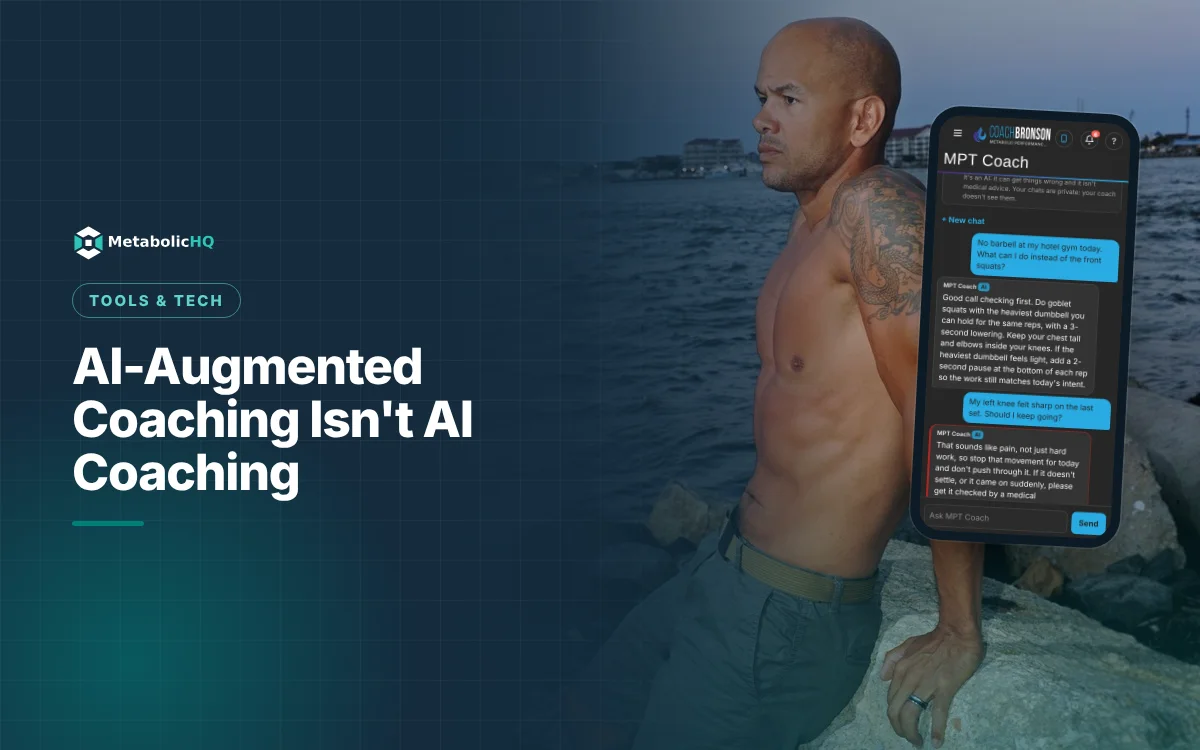
Application is judgment, and it shows up in small, timely decisions: adjusting a plan when life changes, noticing a win and saying so, catching the drift before the client quits, deciding what not to change. It's also the part no app or AI can do for you, which is why the best tools are the ones that help you decide rather than deciding for you.
How to be a more professional coach this month
- Write down your standards. Pick the five questions clients ask you most and answer them once, properly, somewhere they can find.
- Build a welcome sequence. What every new client should get in week one, so onboarding doesn't depend on your memory.
- Time one week of admin. Then cut or automate the biggest item.
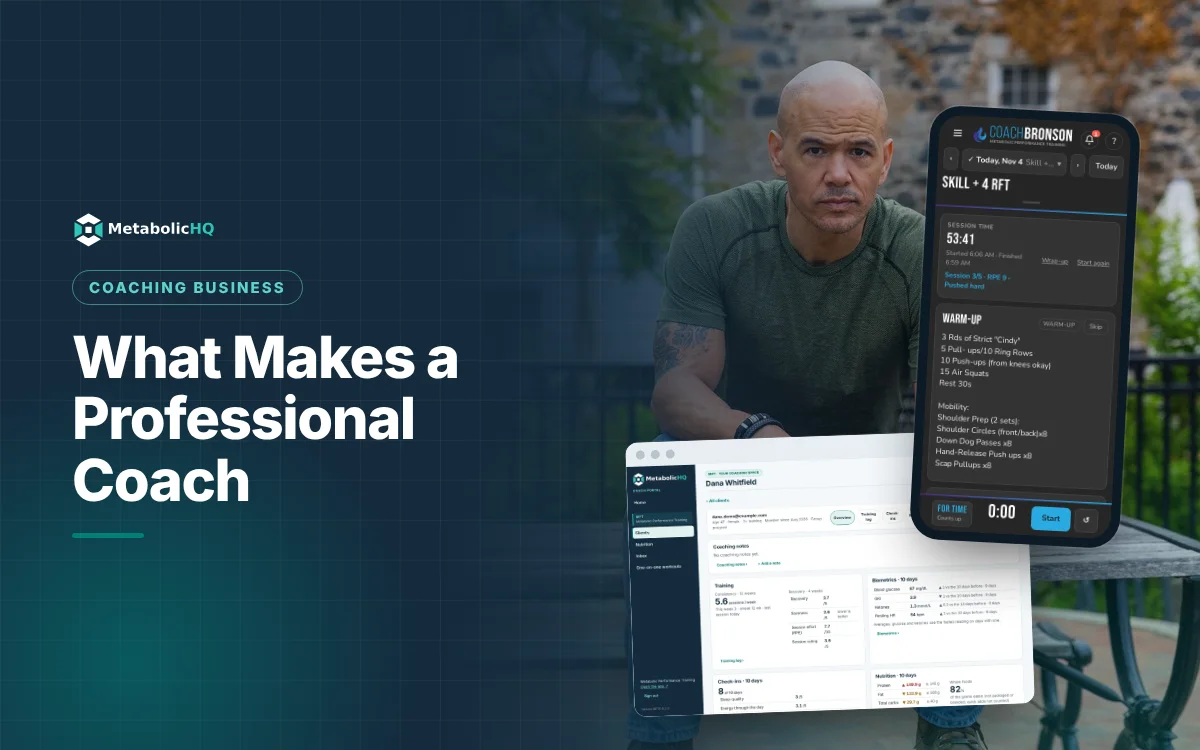
- Put each client on one page. Training, nutrition, recovery and check-ins together before every review.
- Decide, then document. When you change a client's plan, note why. Your future self, and anyone coaching with you, will thank you.
How MetabolicHQ helps a professional fitness coach
I built MetabolicHQ after years of running my own gym on a patchwork of apps, and it's built to support all four.
- Expertise. You write each client's programs, and every exercise comes with a movement video (more than 200 of them). You can replace any video with your own. Your guides, videos and worksheets live in one Resources library, and you can add any of them to a message or workout in a couple of taps.
- Efficiency. Clients get one app with your branding for workouts, food, biometrics, check-ins and video calls. New clients can get your welcome material automatically, released on the schedule you choose. After each call, the app drafts the summary and action items for you.
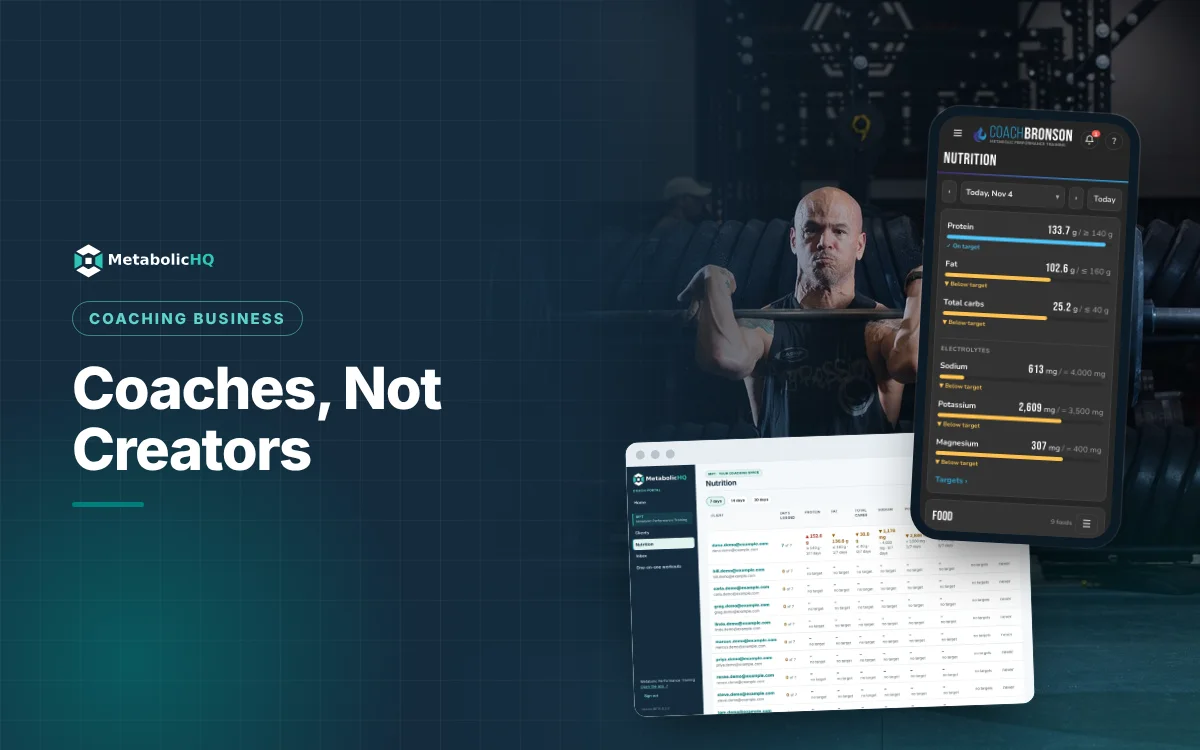
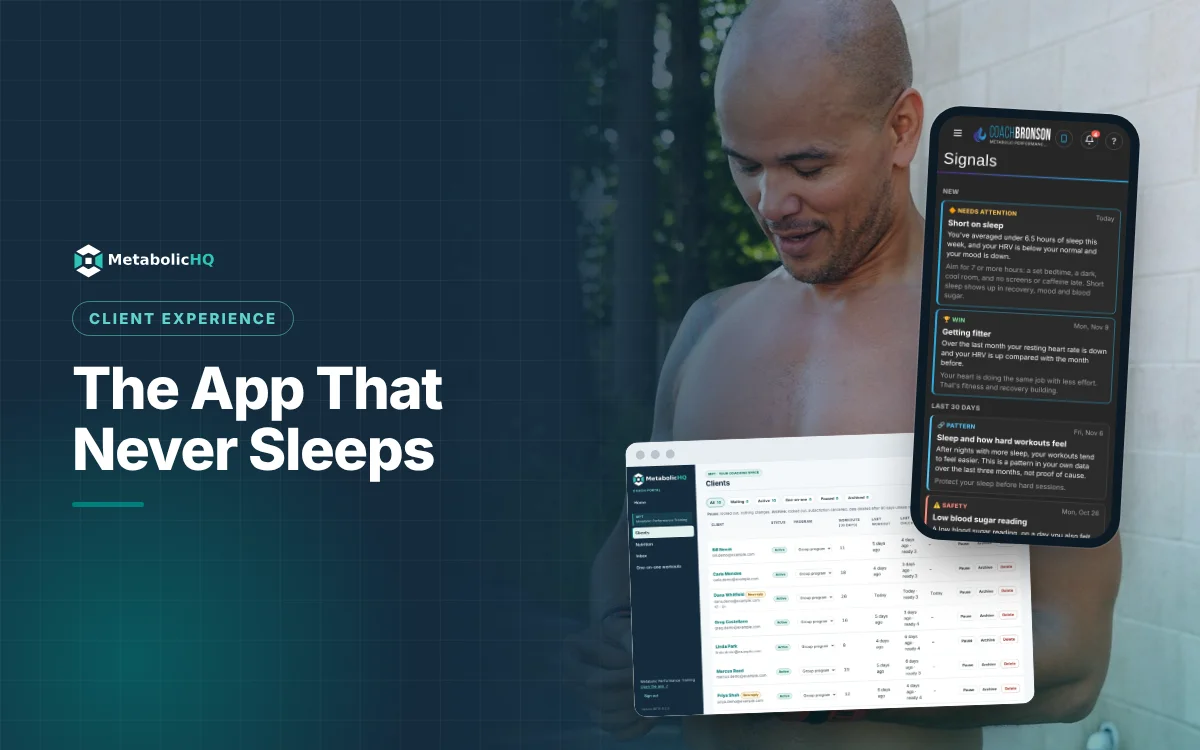
- Insight. Each client's training, recovery, biometrics, check-ins and nutrition sit together on one screen in the coach portal. Every morning, Signals show you which clients need attention.
- Application. This part stays with you. Nothing changes a client's plan unless you change it, and your coaching notes are shared with everyone on your team.
Professional is a set of habits, not a title
No one becomes a professional coach on the day they get certified. It's built from habits: knowing your material, respecting time, seeing the whole person and making good decisions, one client at a time. The right systems don't replace any of that. They make it possible to do all four, for every client, every week.
Coach BronsonFounder of MetabolicHQ. 20 years coaching human performance and nutrition, 25 in IT engineering and program management. More about me
Try it with your own clients
MetabolicHQ is free for up to 5 clients: training, low-carb nutrition, biometrics and coaching calls in one app under your brand.
Start free